
Over 90% of online experiences begin with a search engine, and roofing is no exception. When a homeowner spots a ceiling stain after a thunderstorm or realizes their shingles are curling, they reach for their phone-not the phone book. In fact, 87% of customers use Google to evaluate local businesses before making a call. For roofing companies, this means your online visibility directly determines how many estimates you book and how many jobs you close.
This roofer seo guide is built specifically for roofing businesses-not generic local shops or restaurants. It covers everything you need to rank for high-value roofing services in your service area: from on page seo and local seo to content marketing, technical seo, and tracking ROI. The payoff is straightforward: more inbound calls, fewer hours door-knocking, lower reliance on expensive paid ads, and a pipeline of profitable roofing jobs from organic search. And since 50% of companies claim organic SEO has the highest ROI of any marketing channel, the math checks out.
Here’s what we’ll cover:
- What roofer SEO actually is and how search engines decide which roofing contractors show up first
- Why roofing SEO differs from generic local SEO
- Industry and niche research that sharpens your strategy
- Keyword research, website structure, and on-page optimization
- Local SEO, the Google Map Pack, and service area pages
- Content marketing, technical SEO, link building, and reviews
- Tracking results, adapting for AI search, and when to hire a roofing seo agency
- A 90-day action plan you can start this week
What Is Roofer SEO and How It Works
Roofer SEO is search engine optimization tailored to roofing services-roof repair, roof replacement, storm damage, inspections, commercial roofing, and everything in between. It’s the process of making your roofing website and online presence show up when homeowners search for help with their roof.
The difference between organic search and paid ads matters here. Local roofing keywords often cost $20–$50+ per click in Google Ads for emergency terms, and even “roof replacement” queries can run $25–$40 per click. A single lead from paid ads can cost $80–$250 depending on your conversion rate. Organic rankings, by comparison, deliver clicks at no per-click cost once you’ve earned the position.
Search engines like Google crawl your roofing website, evaluate how relevant and trustworthy it is, then decide which roofing companies appear first in search results. They look at keyword usage, content depth, backlinks, reviews, business consistency across the web, and user behavior signals like mobile usability and load speed. Nearly 46% of all Google searches have local intent, which means search engines pay special attention to your location, service area, and proximity to the searcher. Roofing is a local, high-intent service, and Google treats it accordingly.
Think of it as a flow: searcher types “hail roof repair Charlotte” → search engine evaluates keyword relevance, location, authority, and trust signals → search results page shows Map Pack listings, organic results, AI overviews, and ads → your roofing website or Google Business Profile appears if you’re optimized.
The four pillars-on page seo (your service pages and content), off page seo (backlinks and citations), technical seo (speed, mobile, schema), and local seo (Google Business Profile, reviews, NAP consistency)-all work together.
Why Roofing SEO Is Different From Generic Local SEO
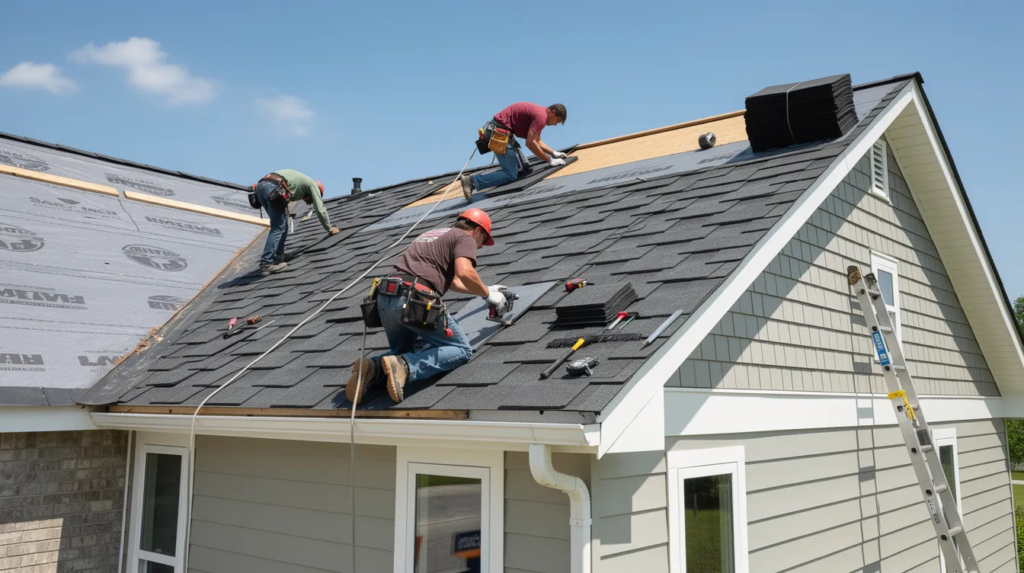
Not all local businesses face the same SEO challenges. Roofing demand is often emergency-driven-homeowners search urgently after hail storms, wind events, or heavy rain. This creates seasonal spikes that vary by region: spring hail in Texas, hurricane season in Florida, ice dams in northern states during winter. Your SEO strategy needs to account for these patterns rather than treating traffic as steady year-round.
Roofing jobs are also high-ticket. A full replacement can cost $8,000–$25,000+, so homeowners research heavily before calling. They read reviews, compare warranties, look at before-and-after photos, and check credentials. Trust signals and detailed content carry more weight in roofing than in many other local businesses.
Here’s what makes roofing SEO distinct:
- Emergency intent: Searches like “emergency roof tarping near me” demand proximity and speed; the local map pack algorithm strongly favors nearby, well-reviewed roofers for these queries.
- Seasonality: Search volume for storm damage keywords can spike 300%+ after a major weather event, then drop. Your content calendar and page readiness must match.
- High competition: Many markets have dozens of roofers plus national lead-gen sites all chasing the same “roofer near me” and “roof repair [city]” terms. CPCs reflect this intensity.
- Service area complexity: Roofing businesses often serve wide geographies-a metro plus suburbs-so defining and optimizing for each area matters more than for a single-location shop.
Niche + Industry Research
Understanding the roofing industry’s specific niches and local market dynamics is the foundation of any effective roofing seo strategy. Without this research, you’re guessing at which keywords to target and which services to highlight.
Identify Key Roofing Niches
The roofing industry isn’t monolithic. Common segments include:
- Residential roof repair (leaks, minor damage): lower job values, faster conversions
- Roof replacement (shingles, metal roofing, tile): high value, longer sales cycles
- Storm damage repair (hail, wind, rain): urgent, insurance-driven, volatile demand
- Commercial roofing (flat roofs, TPO, EPDM): different materials, regulated, high contract value
- Roof inspections (pre-sale, insurance, preventive): entry points for upselling
- Specialty materials (metal, slate, green roofs): niche but less competitive
Each niche differs in customer intent, job size, and seasonality. Storm damage repair converts fast but spikes unpredictably. Retail replacements are steadier but face stiffer competition.
Analyze Local Market Demand
Regional weather patterns heavily shape what homeowners search for. Texas has unpredictable hailstorms, Florida has hurricanes, and New England deals with heavy snow and ice. Use tools like Google Trends and local news sites to identify seasonal spikes and trending roofing searches in your service area. For example, search volume for “hail damage roof” in Oklahoma can spike dramatically within days of a storm.
Evaluate Competitor Landscape
Identify who ranks in the local map pack, who publishes strong content, and who dominates reviews. Tools like Ahrefs or SEMrush reveal which roofing keywords competitors target and where gaps exist. Maybe no one in your city has a solid page on “insurance roof replacement process” or “metal roof maintenance after hail.” Those gaps are your openings.
Understand Customer Pain Points
Specific keyword tools can reveal what homeowners are searching for. Check “People Also Ask” in Google for questions like “how to tell if hail damaged your roof,” “roof replacement timeline,” and “does insurance cover wind damage.” Long-tail keywords can yield 90–100% of clicks in niche markets where broader terms are dominated by aggregators.
Map Industry Insights to SEO Strategy
Align your roofing seo keyword strategy and content plans with niche-specific demand. Prioritize high-value niches and relevant keywords that attract profitable roofing customers and align with what your roofing business offers. For instance, if insurance-based storm damage yields higher margins in your area, build content around insurance claims processes, adjuster expectations, and storm damage checklists.
Building a Roofing SEO Strategy Around Your Best Leads
Before chasing rankings, define your ideal jobs. Are you focused on retail replacements, insurance storm damage, commercial flat roofs, or small leak repairs that lead to upsell opportunities? Your SEO strategy should prioritize keywords and pages that bring profitable roofing services-not just maximum website traffic. A page targeting “roof replacement [city]” will generate fewer but far more valuable leads than a blog post about “DIY roof patch.”
Map your service types into buckets, each with its own keyword group:
- Insurance work: storm damage, hail claims, adjuster coordination
- Retail replacements: full re-roofs, material upgrades, aging roof replacement
- Emergency repairs: leaks, tarping, fallen tree damage
- Commercial projects: flat roofs, TPO, maintenance contracts
Quality content that maps to these buckets improves search rankings and generates leads from the right audience.
A simple keyword-job-page matrix helps you stay organized. Imagine columns for Intent (emergency vs. planned), Job Type (repair, replacement, inspection, commercial), Core Keyword (e.g., “roof leak repair [city]”), and Target Page Type (service page, city page, blog guide, FAQ). This ensures every page on your site is tied to a business objective, not created randomly.
Roofing Keyword Research and Mapping
Start by listing every roofing service you actually offer: residential repairs, replacements, inspections, gutter work, commercial TPO, metal roofing, tile, storm damage-the full picture. Then combine each service with geo modifiers for local seo: city names, suburbs, “near me,” and the neighborhood names homeowners actually type into Google.
Using Google Keyword Planner helps identify popular roofing keywords, and tools like Ahrefs, SEMrush, and free options like Google autocomplete and “People Also Ask” round out the picture. Targeting local keywords improves visibility for roofing services because you’re matching exactly what homeowners search for.
Keyword difficulty and search volume matter, but don’t obsess over volume alone. “Roofing company Columbus Ohio” might show 1,200 monthly searches with high difficulty, while “metal roof repair Westerville” shows 90 searches with lower difficulty and higher conversion potential because fewer competitors are targeting it. The lower-volume term might be more profitable per click.
Here’s a simplified keyword map for a roofing company based in Columbus, OH:
- Homepage: “roofing company Columbus Ohio”
- Service pages: “roof repair Columbus OH,” “roof replacement Columbus OH,” “storm damage roofer Columbus”
- Niche pages: “metal roofing Columbus,” “commercial roofing Columbus OH”
- Location pages: “roofing services Westerville OH,” “roofer in Dublin Ohio,” “roof repair Gahanna”
- Blog posts: “roof replacement cost Columbus 2026,” “hail damage roof signs Ohio,” “how to file an insurance claim for roof damage”

Structuring Your Roofing Website for SEO
Your website structure matters for both homeowners and search engines. A clear architecture-homepage → core services → specific service details → city or service area pages → blog and guides-helps Google understand what each page is about and helps visitors find what they need fast.
Think of it as a “roofing ladder” structure. Your top-level page is “Roofing Services in [Metro],” then below it sit separate service pages for roof repair, roof replacement, storm damage, inspections, gutters, and commercial roofing. Dedicated service pages help improve SEO for specific locations and niches rather than lumping everything into one generic page.
Don’t shortchange high-value niches. If you install metal roofing, create a dedicated metal roofing page. Same for tile roofing, flat roof repair, and hail damage inspections. Each major service page should have 800–1,500 words of genuinely helpful content with sections covering the problem, your process, materials used, warranties, and FAQs.
Here’s what a competitive roofing site in a mid-size US city might look like:
- Homepage
- Core services: Roof Repair, Roof Replacement, Storm Damage, Inspections, Commercial Roofing
- Under Repair: Roof Leak Repair, Metal Roof Repair, Flat Roof Repair, Gutter/Fascia Repair
- Under Replacement: Shingle, Metal, Tile
- Commercial: Flat Roofs, TPO/PVC, Maintenance
- Location pages: Primary city + 5–10 suburbs
- Blog/Guides: 20+ posts covering seasonal tips, cost breakdowns, insurance help
In total, you’re looking at 20–40 service and location pages plus 30–50 blog posts for a truly competitive site.
On‑Page SEO for Roofing Websites
Each important page on your site should target one primary roofing keyword plus a few close variations. For a roof repair page in Dallas, your primary keyword might be “roof repair Dallas TX” with variations like “leaky roof repair Dallas” and “roof leak repair near me.”
Here’s your on-page checklist:
- Title tags: Include your primary keyword and city name, plus one benefit. Keep titles under ~60 characters. Example: “Dallas Roof Replacement Experts • Free Estimate & Warranty”
- H1 heading: Match or closely reflect the title tag. One H1 per page.
- First 100 words: Include the city name and the core problem or benefit naturally.
- Subheadings (H2/H3): Break content into scannable sections-problems, causes, process, materials, FAQs.
- Meta descriptions: Write 140–160 characters summarizing what the homeowner wants. Example: “Need a durable roof replacement in Dallas? We install asphalt, metal & tile roofs with lifetime warranties. Call now for a free quote!”
- Image alt text: Name images clearly, like “hail damage roof Plano TX before repair” to help image search results.
- Internal links: Link from service pages to related services and from blog posts back to money pages.
Write natural, homeowner-friendly copy that answers real questions. Robotic content stuffed with “roofing company” every sentence hurts more than it helps.
Local SEO for Roofers and the Google Map Pack
For roofing searches like “roofer near me” and “roof repair [city],” the local map pack often generates more phone calls than regular organic listings. Roofers can attract more local customers by claiming their Google Business Profile and optimizing it fully. Google Business Profile optimization is crucial for local seo, and a complete profile increases your local pack ranking.
Here’s your Map Pack optimization checklist:
- Categories: Set your correct primary category to “Roofing contractor.” Using the correct primary category boosts visibility in local searches. Add secondary categories like “Roof repair service” if applicable.
- Service area: Define it accurately-match your actual coverage; don’t stretch it unrealistically.
- Business info: Accurate address, phone, hours, website URL, and a description that includes your services and service areas. An active Google Business Profile signals engagement to local searchers.
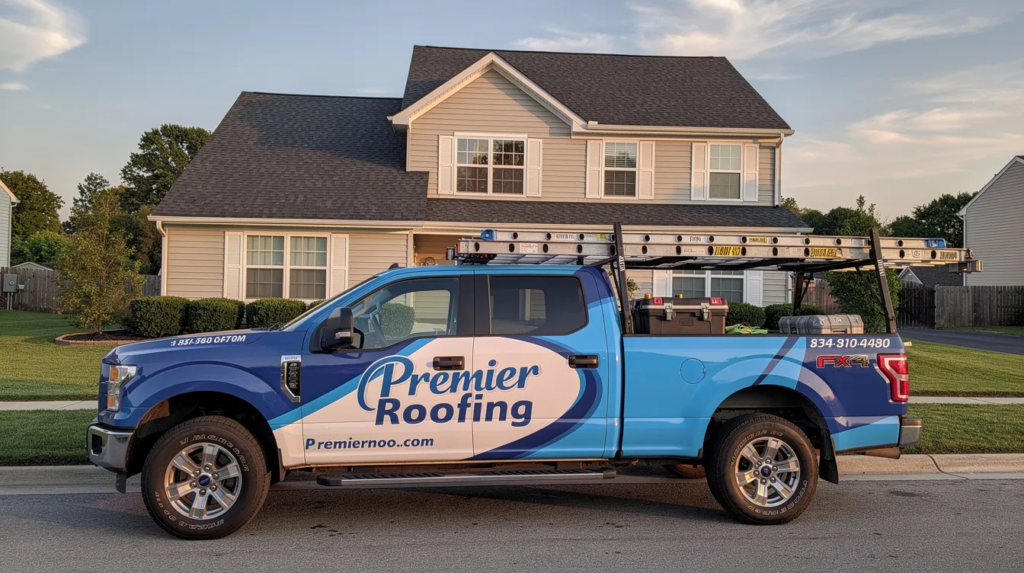
- Photos: Regularly uploading photos of completed projects enhances online visibility. Include before/after shots, crew photos, branded trucks, and recognizable local landmarks.
- Reviews: Customer reviews are a major factor in local SEO prominence. More reviews and positive ratings can improve local ranking. Focus on review velocity-getting a steady flow of new reviews after every completed job beats a stale batch from two years ago. Encouraging satisfied clients to leave reviews builds trust with both Google and future customers.
- NAP consistency: Your Name, Address, and Phone number must be identical across all platforms-your website, directories, social profiles, everywhere. Citations validate a business’s location and existence.
- Regular updates: Updating your Google Business Profile regularly signals engagement. Post about completed jobs, seasonal tips, and emergency availability.
A strong local presence can significantly improve visibility for every roofing-related search in your area.
Service Area and Location Pages for Roofing Businesses
Creating dedicated city or suburb pages helps capture roofing searches from surrounding communities. If you serve Denver and its suburbs, a page for “Roofing Services in Aurora, CO” targets homeowners in Aurora who won’t see your Denver-focused page as relevant to them. Targeted location pages help improve SEO for multiple served areas.
Each service area page must have unique content-not boilerplate copy pasted across 15 city names. Include local landmarks, typical roof types in that community, local weather issues (snow load, hail frequency), and one or two local case studies with dates and neighborhood references. Aim for 600–1,000 words of locally relevant content per page.
Link each service area page back to your core service pages (roof repair, replacement, storm damage) and vice versa. This internal linking strengthens your overall site authority and helps Google understand the relationship between your services and the areas you serve.
Example cluster: Main page “Roofing in Denver, CO” covers the metro broadly. Suburb pages for Aurora, Lakewood, and Littleton each discuss local roof styles, common hail damage patterns in that area, and a recent project completed in that suburb.
Content Marketing for Roofers: Blogs, Guides, and FAQs
Your service pages target the main money keywords. Blog posts and guides capture question-based and seasonal roofing searches that bring homeowners into your orbit before they’re ready to call. Roofing companies should create content that answers common questions-this is how you build trust and earn organic traffic from people who will eventually need a roofer.
Content marketing can generate 8.5 times more leads than traditional marketing. High-quality content helps establish authority in the roofing industry, and every blog post is another page Google can rank for a relevant search.
Here are concrete blog post topics to start with:
- Signs your roof was damaged in the last storm
- Roof replacement cost breakdown in [City] 2026
- Metal vs asphalt shingles: pros, cons, lifespan
- How to file an insurance claim for roof damage
- Common roof repair scams and how to avoid them
- What to expect during a roof inspection
- Flashings, vents, and valleys: are they causing your leaks?
- Preventing ice dams: what homeowners in [region] need to know
- Roof maintenance checklist for spring and fall
- How to choose a roofing contractor: what credentials matter
- What does a 30-year shingle warranty really cover?
- What to do after a severe thunderstorm in [city]
Create a seasonal content calendar keyed to local weather patterns and insurance claim deadlines. Publish storm-prep content before spring hail season, maintenance tips before winter, and local case studies after major weather events.
Every blog post should include internal links back to your main service pages and relevant city pages. Structure posts with headings, short paragraphs, and clear calls-to-action like “Schedule a free inspection” or “Call us for emergency tarping.”
Technical SEO and User Experience for Roofing Websites
Over 70% of roofing searches originate on mobile devices, often in urgent situations. Mobile-friendly websites are crucial for roofing SEO success, and Google uses mobile-first indexing to evaluate website rankings-meaning your mobile experience is what Google judges first.
Roofing contractors should prioritize local SEO and mobile optimization together. Mobile optimization includes ensuring buttons are easy to tap and text is readable without zooming. Mobile-friendly websites rank higher in Google search results, period.
Here’s a technical checklist you can hand to your developer:
- Site speed: A site should load in under three seconds to retain visitors. Compress large before-and-after photos, lazy-load images, and minimize heavy scripts.
- HTTPS: Required. HTTPS is a minor ranking factor that builds user trust-and it’s non-negotiable for any business collecting contact information.
- XML sitemap: An XML sitemap helps Google find important pages on your site. Submit it through Google Search Console.
- Clean URLs: Use readable paths like /roof-repair-dallas instead of /page?id=437.
- No broken links: Audit regularly. Broken links hurt both user experience and crawl efficiency.
- Schema markup: Implementing local business schema helps Google recognize your location and services. Add FAQ, Review, and Service schema where relevant.
- Click-to-call buttons: Visible phone number in the header on every page, with a tap-to-call function on mobile.
- Simple forms: Minimal fields-name, phone, zip code, brief description. Long forms kill conversions on mobile.
Link Building and Online Authority for Roofing Services
Backlinks from authoritative websites signal to Google that a business is trustworthy. Quality backlinks from relevant sites boost your site’s authority, and backlinks can indirectly improve your organic search rankings by increasing how much Google trusts your domain.
Where to earn good links:
- Local organizations: Earn local backlinks by sponsoring community events-youth sports teams, charities, school fundraisers. Chambers of commerce and trade associations often link to member businesses.
- Manufacturer directories: GAF, CertainTeed, and other major manufacturers list certified contractors on their websites.
- Local news: Storm response coverage, community project features, or expert quotes in local news site articles can generate high-authority links. Create link-worthy content like “Roofing cost in [city] for 2026” reports that local blogs might reference.
- Industry directories: Aim for backlinks from local directories and industry sites like NRCA, BBB, and home-services platforms.
Local mentions enhance your roofing SEO efforts significantly, even when they don’t include a clickable link.
Red flags to avoid:
- Cheap link packages from overseas providers
- Links from irrelevant sites (gaming forums, random blogs)
- Paid directories with no real traffic or authority
- Overly commercial anchor text across dozens of low-quality sites
Quality over quantity, always.
Optimizing Titles and Meta Descriptions for Higher Click‑Throughs
Title tags and meta descriptions are what homeowners see on the search results page before deciding whether to click. They won’t improve your ranking directly, but they dramatically affect click-through rates.
Here’s a swipe file you can adapt for your core roofing pages:
| Page | Title (~60 chars) | Meta Description (~150 chars) |
| Homepage | Top Roofing Company in [City] · Free Inspections | Looking for expert roofers in [City]? We offer roof repairs, replacements & storm damage help. Licensed, insured, free quote. |
| Roof Repair | Roof Leak Repair [City] • 24/7 Emergency Service | Need fast roof leak repair in [City]? Our team responds within hours. Insured & affordable. Call now. |
| Roof Replacement | Roof Replacement [City] · Asphalt, Metal, Tile | Replace your roof with confidence. High-quality materials, 30-year warranty. Get your free estimate today. |
| Service Area | Roofing Services in [Suburb], [State] | Serving [Suburb] for roof repairs, replacements & storm damage. Local crews, free inspections. Call us. |
Keep titles clear, include the primary keyword and city name, and lead with a benefit or differentiator. Avoid keyword stuffing-write for humans first.
Harnessing Reviews and Reputation for SEO and Conversions
Reviews influence both search engine results and whether a homeowner picks up the phone. According to BrightLocal’s 2025 survey, 96% of consumers are open to writing reviews, and 88% prefer businesses that respond to all of them. More reviews and positive ratings improve local ranking directly.
Here’s what matters most: 64% of consumers only consider providers with at least a 4-out-of-5-star rating. That means maintaining quality and asking for reviews consistently is non-negotiable.
Sample review request script (send via text or email within 24 hours of job completion):
“Thank you for choosing [Company Name]. Could you share your experience with our recent roof replacement in [Neighborhood]? A quick Google review helps us help other homeowners: [link]”
Reviews that mention specific services (“roof replacement,” “storm damage repair”) and city names help with long-tail local SEO signals.
Responding to a negative review (example):
“I’m sorry your gutters weren’t fully cleaned after the job-we take pride in our cleanup process. Please contact me directly at [phone], and I’ll send a crew to finish the details. We want you completely satisfied.”
Always respond to every review-positive and negative. It demonstrates professionalism and builds trust for future prospects reading them.
Tracking Roofing SEO Results and ROI
The metrics that matter for roofing SEO are straightforward: organic traffic to your money pages, rankings for core roofing keywords, phone calls, form submissions, and ultimately booked roofing jobs and revenue. Ignore vanity metrics that don’t connect to leads.
Use Google Search Console to monitor keyword performance, indexing issues, and technical errors. Google Analytics 4 tracks page traffic, user behavior, and goal completions. Add call tracking numbers (unique per channel) so you can tie phone calls back to organic search or Google Maps visibility.
Review your data monthly. Here’s a simple reporting template:
- Month: [date range]
- Total website visits / organic traffic % change
- Top 10 service/location keyword rankings and movement
- Phone calls from organic + Maps
- Form submissions
- New reviews: count + average rating
- Leads → booked jobs → revenue from SEO
- Key action items for next month
This template works whether you manage SEO yourself or hand it to an internet marketing agency. The goal is connecting seo efforts directly to revenue so you know your marketing budget is working.
Roofer SEO in the Age of AI Search (2025–2026 and Beyond)
Google’s AI-driven search features are reshaping how roofing customers find contractors. AI Overviews now appear in roughly 57% of local search intent queries, and approximately 45% of consumers use AI tools like ChatGPT or Gemini for local service recommendations-up from just 6% a year ago. If your roofing business isn’t showing up in these AI-generated answers, you’re losing search visibility.
Roofing websites with comprehensive, well-structured content and strong local authority are more likely to be recommended by AI systems. Here are four steps to future-proof your roofing SEO:
- Ensure entity consistency: Your GBP, website, and all directory listings must have identical business information. AI systems cross-reference these.
- Publish authoritative, complete content: Write pages that fully answer homeowner questions in natural, conversational language-not short keyword-stuffed blurbs. AI pulls from content that thoroughly covers a topic.
- Add schema markup: FAQ, LocalBusiness, Review, and Service schema help AI systems parse and cite your content.
- Monitor AI outputs: Search for “best roofing contractor [your city]” in Google AI Mode and ChatGPT. If you’re not appearing, it’s a signal to strengthen content depth, reviews, and citations.
Use AI tools for ideation and outlines, but have humans add real project examples, dates, local stories, and expert insights. That’s what makes your content uniquely valuable-and what AI systems increasingly reward.
When to Hire a Roofing SEO Agency or Freelancer (and What to Ask)
Hiring a professional seo partner makes sense in specific scenarios: you’re in a competitive metro area with many roofing companies fighting for the same terms, you run multiple locations or wide service areas, you lack internal bandwidth for consistent content and optimization, or your traffic dropped after a Google core update.
Questions to ask any roofing seo company/agency or freelancer:
- Do you have case studies from other roofing companies or home-services businesses?
- Can you show improvements in Map Pack and GBP visibility specifically?
- How do you report on actual leads and revenue-not just rankings or traffic?
- What will you need from our team? (Photos, project details, review help)
- How do you handle AI-search visibility and AI Overviews?
Agency vetting checklist (print this):
- Demonstrated experience with roofing or home-services SEO
- Local client references you can contact
- Transparent deliverables and timelines
- Reporting on calls, form submissions, and revenue-not just rankings
- You retain ownership of your website, content, and all accounts
- No guaranteed “#1 rankings” promises
- Clear roofing seo keyword strategy for your specific local market
- Includes GBP optimization and review generation in their roofing seo services
Avoid agencies that use vague jargon, promise instant results, or can’t explain their digital marketing solutions in plain language.
Putting It All Together: Your 90‑Day Roofer SEO Action Plan
Here’s your roadmap, broken into three 30-day blocks. Each month builds on the last.
Month 1: Audit and Foundations
- Run a full SEO audit: check website structure, page load speed, mobile usability, duplicate or thin content, and broken links.
- Complete keyword research and mapping: list all services with geo modifiers, identify gaps, and build your keyword-job-page matrix.
- Claim and optimize your google business profile: set categories, service area, upload photos, write your description, and verify hours.
- Create or revise your core service pages (roof repair, roof replacement, inspections, storm damage, commercial roofing) with 800–1,500 words each.
Month 1 goal: Publish 3 new or substantially improved service pages and fix core technical issues.
Month 2: On-Page and Local SEO
- Build 2–3 service area pages with unique local content, case studies, and neighborhood-specific details.
- Optimize every page: titles, meta descriptions, heading structure, image alt text, and internal linking.
- Launch your review request process-send a link to every customer within 24 hours of job completion.
- Audit NAP consistency across all directories and fix any discrepancies. Ensure citations are accurate everywhere.
Month 2 goal: Secure 5–10 new Google reviews and create 2 city/suburb pages.
Month 3: Content, Links, and AI-Search Readiness
- Publish 2–4 blog posts or guides addressing homeowner questions and seasonal concerns.
- Begin link building: reach out to local news contacts, manufacturer partners, and directory listings. Create at least one link-worthy asset (a local cost report or storm damage guide).
- Add schema markup (FAQ, LocalBusiness, Review) and confirm mobile UX, site speed, and HTTPS are solid.
- Set up your monthly reporting template using Google Analytics 4 and google search console. Track keyword rankings, Map Pack position, calls, and form submissions.
Month 3 goal: Publish blog posts, gain 2–3 local backlinks, and see measurable improvement in rankings for targeted local and service keywords.

The Long Game
Most roofing companies never commit to a solid seo strategy long enough to see its full potential. Consistent roofing SEO is like planting trees-early work yields compounding results over months and years. Every new service page, every fresh review, every quality backlink adds to a foundation that delivers more inbound leads and greater profitability than any other channel.
The roofers who invest in organic visibility today will spend less chasing leads tomorrow. Many roofing companies rely heavily on local service ads and high-CPC campaigns, but organic search builds a pipeline that doesn’t evaporate when you pause your ad spend.
Pick three tasks from the Month 1 list and start this week. Bookmark this roofing seo guide and revisit it monthly as you move through your 90-day plan. Your future self-and your bottom line-will thank you.